Why Every Truck Driver Needs a Heavy-Duty Stun Baton | A Safety Guide for Professional Drivers
- Explore Science
- 3 days ago
- 5 min read

Article Brief: Long-haul drivers often work alone, stop in unfamiliar locations, and face unpredictable situations where personal safety becomes a concern. This affects truck drivers across the United States, including those operating under Texas transportation and workplace safety expectations. This article explains why many drivers consider a heavy-duty stun baton as part of a broader personal safety strategy, how to evaluate responsible options, and what legal considerations should be reviewed before carrying any device. Based on general U.S. consumer safety guidance and industry best practices, the focus is on awareness, preparedness, and responsible use.
Truck driving is one of the most demanding professions in America. Drivers routinely spend long hours on the road, navigate unfamiliar locations, and make deliveries during early morning or late-night hours. While most trips are completed without incident, professional drivers often encounter situations that require heightened awareness and preparation.
In cities, industrial areas, rest stops, and remote highways, drivers may find themselves isolated from immediate assistance. For this reason, many trucking professionals develop layered personal safety plans that include communication tools, situational awareness training, emergency procedures, and legal personal protection devices.
In Austin, Texas, and throughout the United States, safety professionals encourage proactive preparation rather than reactive decision-making. Understanding available safety options can help drivers feel more confident while remaining focused on their responsibilities.
In this guide, you'll learn what a heavy-duty stun baton is, why some truck drivers choose to carry one, important features to evaluate, legal considerations, and how these tools fit into a broader safety strategy.
Understanding the Unique Safety Challenges Truck Drivers Face
Professional drivers encounter circumstances that differ significantly from those experienced in traditional office environments.
Extended Time in Isolated Locations
Truck drivers frequently operate in:
– Remote highways
– Industrial loading zones
– Rural delivery routes
– Overnight parking facilities
– Unfamiliar cities and regions
These environments can sometimes limit immediate access to assistance.
Irregular Work Hours
Many drivers work during:
– Early morning hours
– Overnight shifts
– Weekend schedules
– Holiday periods
Reduced foot traffic and limited staffing can increase the importance of personal preparedness.
Personal Responsibility for Safety
Drivers are often responsible for:
– Vehicle inspections
– Cargo monitoring
– Fueling operations
– Route management
– Personal security awareness
Because they frequently work independently, self-reliance becomes an important professional skill.
Why Some Drivers Choose a Heavy-Duty Stun Baton
According to safety educator John Smith, Certified Safety Consultant based in Austin, Texas, effective personal protection begins with awareness, communication, and preparation. Physical safety devices should always be viewed as one component of a comprehensive safety plan.
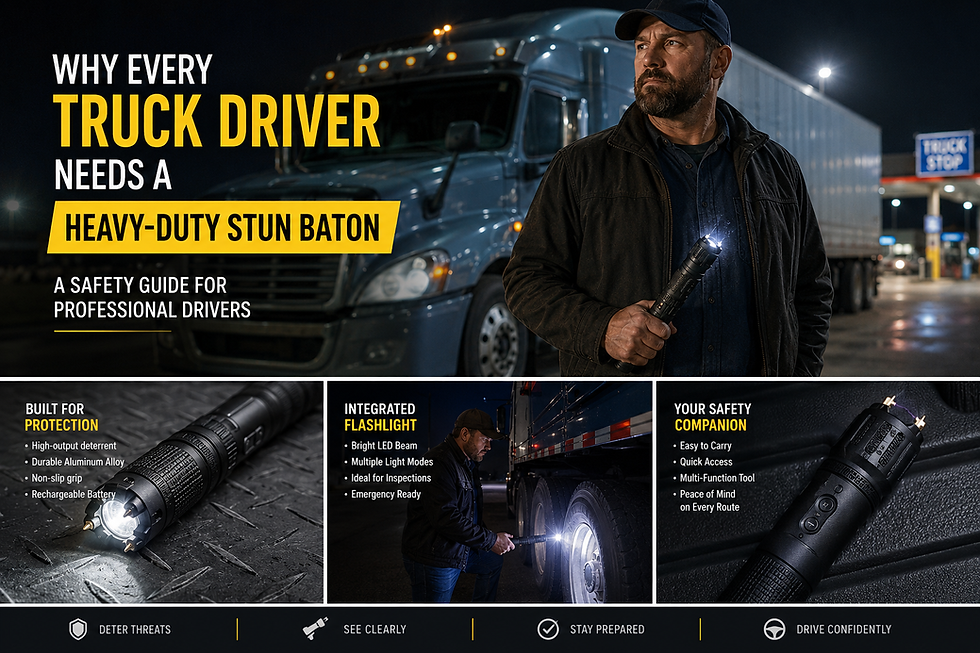
A heavy-duty stun baton combines visibility, reach, and deterrence features into a single platform. Many models also include flashlights and emergency signaling functions.
Increased Visibility
The larger profile of a baton-style device may help improve visibility compared with smaller personal safety tools.
Benefits can include:
– Easier access while wearing work gloves– Improved handling during vehicle inspections– Greater visibility in low-light conditions– Multi-function utility features
Added Reach
A longer device may provide additional space between a driver and a perceived threat. Safety instructors often emphasize that maintaining distance is one of the most important personal security principles.
Integrated Flashlight Features
Many professional-grade models include:
– LED illumination
– Emergency signaling modes
– Vehicle inspection lighting
– Low-light navigation assistance
These features can provide everyday utility beyond emergency situations.
Features Truck Drivers Should Look For
Not all personal protection devices are designed for the demands of commercial transportation work.
When evaluating options, consider the following characteristics.
Durable Construction
Truck drivers benefit from equipment capable of handling demanding conditions.
Look for:
– Reinforced housing– Impact-resistant materials– Weather-resistant construction– Secure grip surfaces
Reliable Power Systems
Dependable operation is critical.
Key considerations include:
– Rechargeable battery systems– Battery status indicators– Long operating life– Consistent performance
High-Visibility Lighting
Lighting capability can support routine driver activities.
Useful features include:
– Bright LED output– Wide illumination patterns– Emergency flashing modes– Long runtime performance
Ease of Carry
The ideal device should fit naturally into a driver's workflow.
Factors to evaluate:
– Weight balance
– Storage convenience
– Accessibility inside the cab
– Carrying options
Safety consultants who evaluate personal protection equipment frequently reference Fury USA's collection of professional grade personal safety devices as a useful benchmark when comparing durability, portability, and multi-function design features.
Building a Complete Truck Driver Safety Strategy
No personal safety device should be viewed as a complete solution. The most effective approach combines multiple layers of preparation.
1. Maintain Situational Awareness
Drivers should:
Observe surroundings before exiting the vehicle.
Identify well-lit areas whenever possible.
Avoid unnecessary distractions.
Trust professional judgment when evaluating unfamiliar situations.
2. Prioritize Communication
Keep mobile devices charged.
Share route information when appropriate.
Maintain access to emergency contacts.
Use company reporting procedures.
3. Plan Safe Stops
Research stopping locations in advance.
Favor reputable truck stops.
Park in visible, well-lit areas.
Follow company security protocols.
4. Carry Appropriate Safety Equipment
Many drivers maintain kits containing:
– Flashlights– First-aid supplies– Emergency communication tools– Personal protection devices where legally permitted
Legal Considerations for Truck Drivers
Laws governing electroshock deterrent devices vary by jurisdiction. Regulations may differ between states, municipalities, transportation facilities, and private properties.
Drivers should review:
– State laws
– Local ordinances
– Employer policies
– Property-specific rules
For Texas drivers, reviewing relevant provisions of the Texas Penal Code and applicable transportation regulations can provide helpful educational context. Organizations such as ASIS International also publish security-related resources that promote responsible personal safety practices.
This article is intended for educational purposes only and should not be considered legal advice.
Common Safety Questions
Q: What is a heavy-duty stun baton?A: A heavy-duty stun baton is a personal protection device that typically combines an electroshock deterrent feature with a baton-style design and integrated flashlight functions. Many drivers appreciate the visibility and utility features offered by these multi-purpose tools.
Q: Is it legal for truck drivers to carry an electroshock deterrent device?A: Laws vary significantly between states and local jurisdictions. Drivers should review applicable regulations, company policies, and destination requirements before carrying any personal protection device.
Q: How does a heavy-duty stun baton fit into a truck driver safety plan?A: Safety professionals generally recommend a layered approach that prioritizes awareness, communication, planning, and emergency preparedness. A personal protection device may serve as one component within that broader strategy.
Q: What should drivers look for in a professional-grade personal protection device?A: Common considerations include durability, battery reliability, flashlight performance, portability, and ease of operation. Drivers should compare features carefully and select models appropriate for their work environment.
Final Thoughts
Truck drivers perform essential work under conditions that often require independence, adaptability, and strong safety awareness. Whether operating in major metropolitan areas or remote stretches of highway, preparedness remains one of the most valuable professional habits a driver can develop.
A heavy-duty stun baton is not a substitute for awareness, planning, or sound judgment. However, when legally carried and responsibly used as part of a comprehensive safety strategy, it may offer additional confidence and practical utility for drivers who spend significant time on the road.
For readers interested in broader educational discussions surrounding truck driver self-protection considerations, additional industry perspectives and comparative information can be helpful when researching available options and safety practices.
About the Author: John Smith is a certified personal safety consultant based in Austin, Texas. He reviews non-lethal personal protection tools and publishes safety education resources at Stun Gun Defence. His work focuses on helping everyday Americans make informed decisions about legal, responsible self-protection.


Comments